
Packs, sets and the piece count hidden in an option name
Pack listings keep a single on the menu, and that single sets the card price. The count and the colour mix are written into each line’s name.
Bundles, multipacks and the unit inside
A pack line sells several pieces under one price. Chinese listings name the count in the line itself: 两件装 is a two-pack, 三件装 a three-pack, 三件套 a three-piece set of different items, and 一双装 a single pair. Socks, underwear and basic tees are where packs are most common, and a listing built around packs usually also sells a single so that it has something to show at a low price.
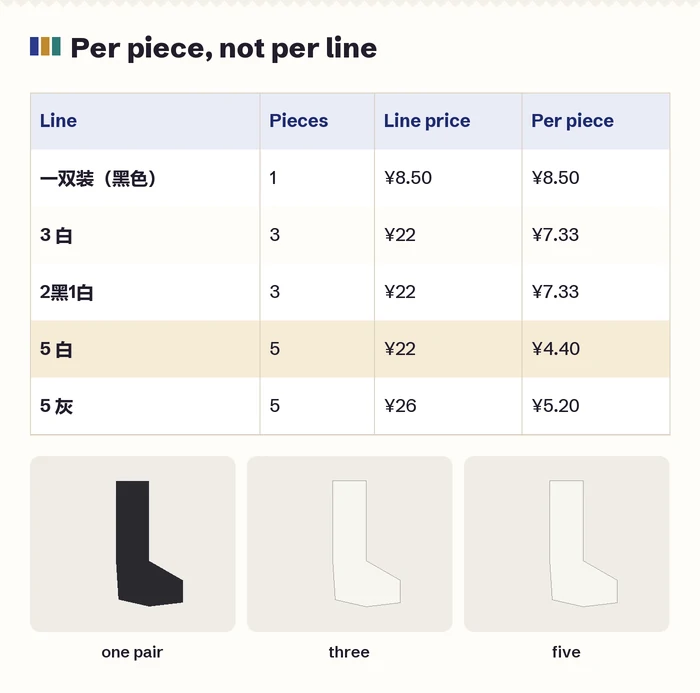
In the recorded socks menu, a single pair was the cheapest option while the remaining entries were packs. The sample does not tell us which option most buyers chose. Check both total pack price and the quantity included.
The fix is arithmetic: divide each pack line by its count and compare per piece. The per-piece figures, not the card, show which line is good value.
Reading the piece count and the mix
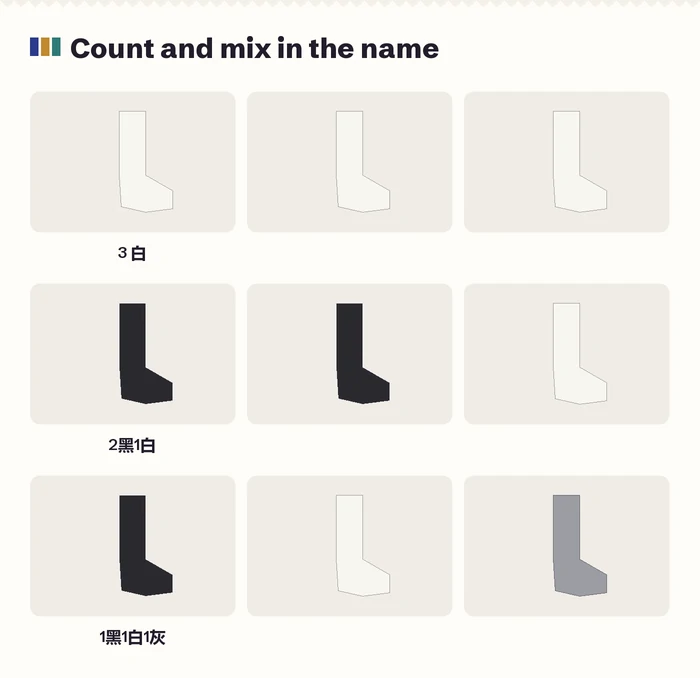
Pack names in the menus we read did two jobs at once: the number of pieces and the colours inside. 3 白 is three white; 2黑1白 is two black and one white; 1 黑 1 白 1 灰 is one each of black, white and grey. Where no mix is written, the pack is usually all one colour, the colour named.
Some sellers leave the mix to you with 拍下备注颜色, order and then note the colours. On an agent order that means writing the colours you want in the order notes in a form the purchaser can pass on, for example “2 black, 1 white”, and checking the warehouse photos for the right mix when the pack arrives.
Check the unit too. 双 counts pairs, 条 counts long items such as trousers or towels, and 件 counts garments.
Sets split into pieces
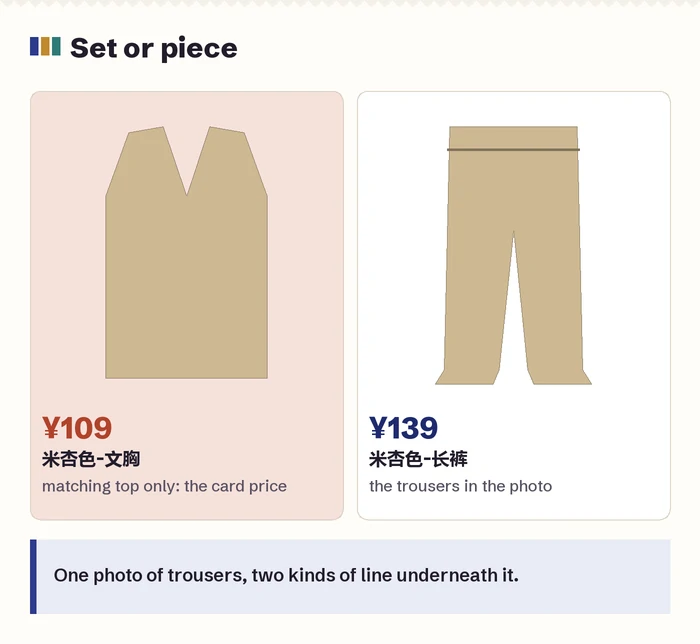
Matching sets are sold the other way round: the full set is one line and each piece is another. 套装 is the set; 单上衣 and 单裤 are top only and trousers only. Because the pieces are cheaper than the set, one of them usually becomes the card price.
A trousers listing we read had two kinds of line in every colour: the trousers, and a matching bra top, which was cheaper. The card showed the bra top’s price under a photo of the trousers. A hoodie listing ran the same way in reverse, with an embroidered set as its dearest line, several times the price of the hoodie alone.
Before choosing, decide whether you want the set or one piece, then find that exact line. A set bought as two separate lines may not match in dye lot or arrive together.
When a bigger pack costs the same
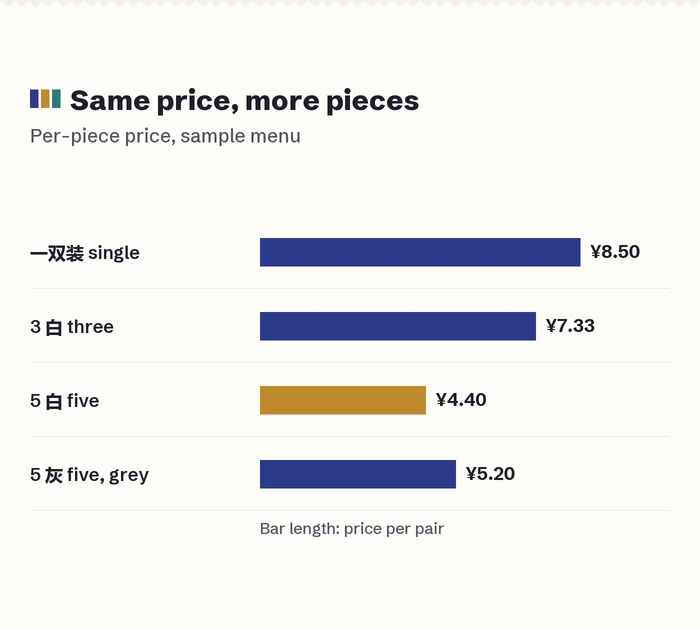
In the dated socks-menu sample, several three-pair and five-pair entries shared a price while another colour differed. That observation shows why pack price should be read option by option. It does not establish why the seller chose those figures or what today’s price is.
The practical effect is that the best-value line can sit anywhere in the menu, and it is rarely the one on the card. Work out the per-piece price for the two or three lines you would consider, then choose; it takes less time than reading the reviews.
One caution: a bigger pack is only better value if you want the extra pieces. Five pairs of a colour you will not wear is not a saving.
Names that sound like two but are one
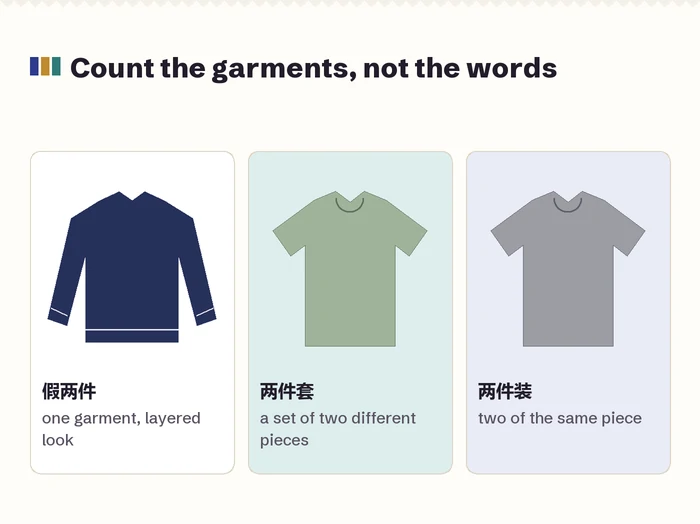
假两件 means a faux two-piece: a single garment made to look like two layers, typically a T-shirt with long sleeves sewn in or a jumper with a shirt collar attached. It is one piece and costs as one piece. In a T-shirt menu we read, the long-sleeve 假两件 line was simply the dearer version of the tee next to it.
两件套 on the other hand is a genuine two-piece set, and 两件装 a two-pack of the same item. The difference is one character, and on a translated page all three can come out as “two piece”. Read the Chinese before you count on getting two garments.
Packs on an agent order
On an agent order the quantity and the pack are separate things. Choosing a three-pack line with quantity two buys six pieces; choosing a single line with quantity three buys three pieces at the single price, which is usually the dearer way. Check both fields before paying.
If the pack needs colours named, put them in the order notes, and keep the wording short and countable. When the warehouse photos arrive, count the pieces and the colours before you approve anything for delivery. A pack that arrives as one piece is far easier to sort out at the warehouse than after it has reached you.